What is the correct barrel length to enter into the calculator?
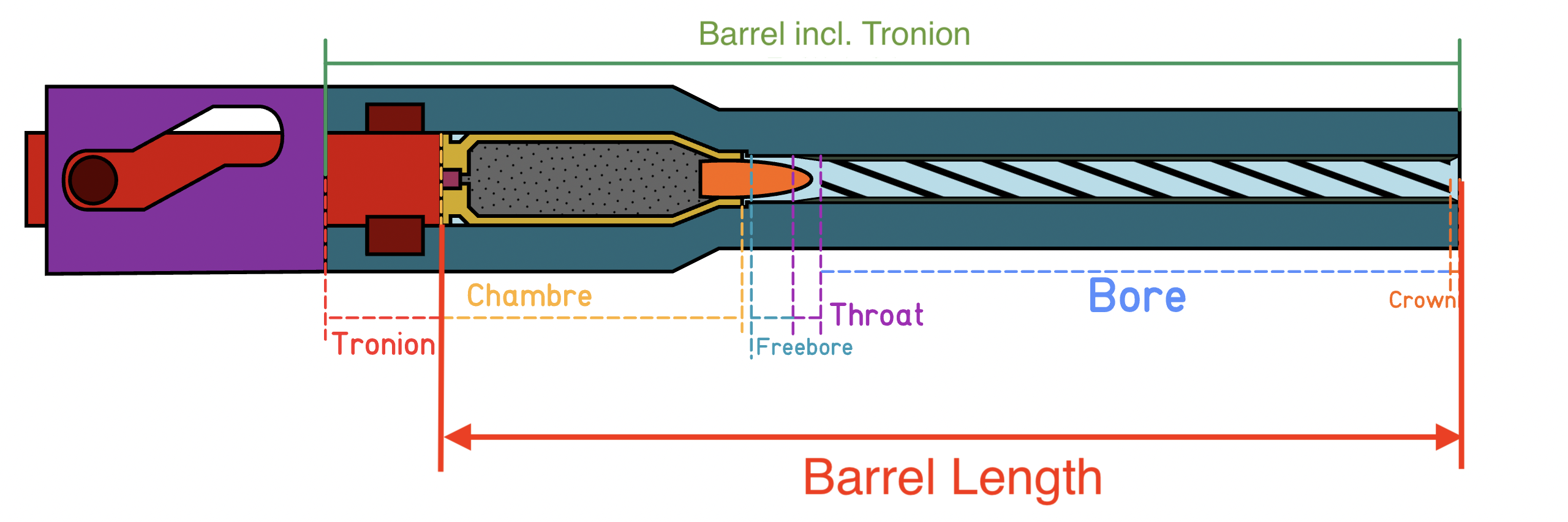
The barrel length to enter into the ballistics calculator is the length from the case base to the barrel muzzle, as indicated in the image. You'd best measure the barrel length, including the trunnion, and then deduct the trunnion length.
For rifles: Measure from the case base (bolt face) to the muzzle crown. If using the manufacturer's stated barrel length, check whether it includes the chamber/trunnion and deduct accordingly.
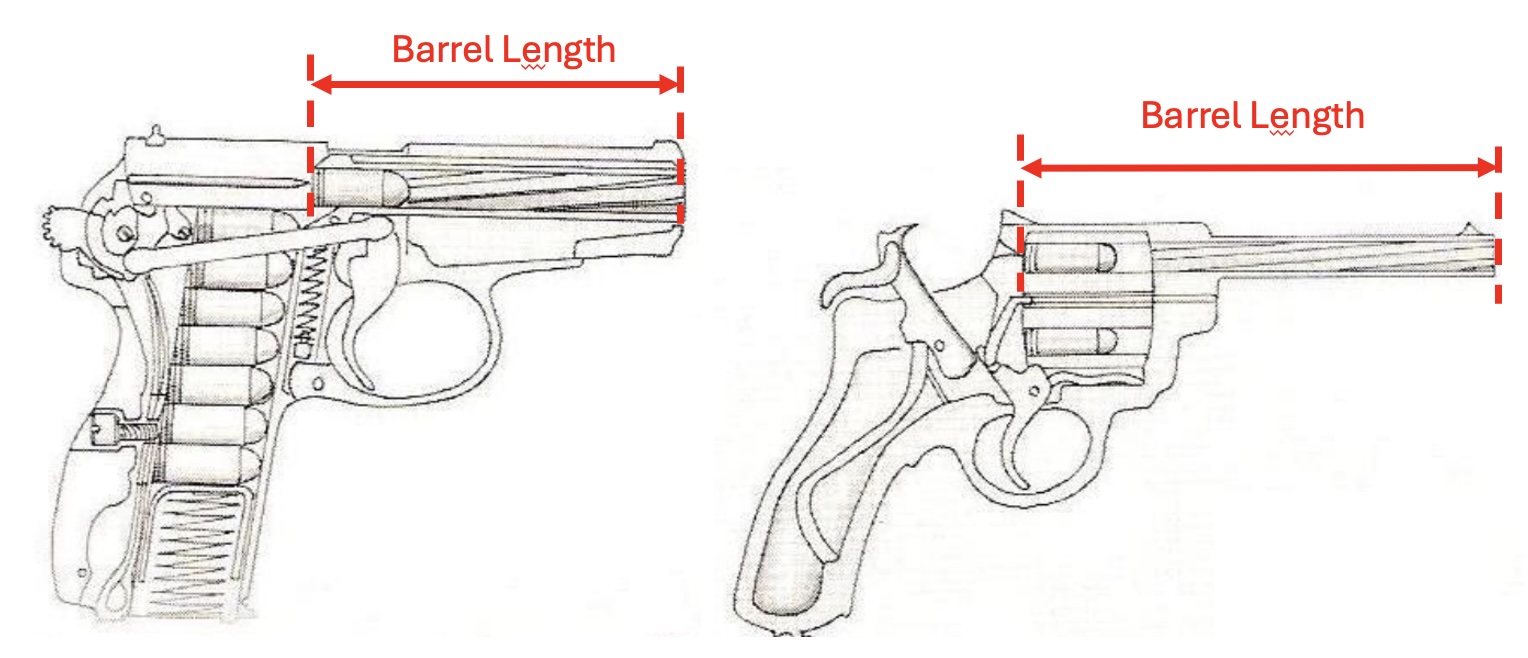
For semi-automatic pistols: Measure from the case base (breech face) to the muzzle. The barrel is fully enclosed in the slide, so gas is fully retained until the bullet exits — the calculator models this accurately.
For revolvers: Revolvers have a small gap between the cylinder face and the barrel forcing cone — typically 0.1 to 0.4 mm. When the cartridge fires, a portion of the propellant gas escapes through this gap before the bullet enters the barrel. This gas leakage reduces the pressure available to accelerate the bullet, resulting in a lower muzzle velocity than a pistol or rifle with an equivalent barrel length would produce.
The ApexLOAD PRO calculator does not model this cylinder gap leakage, since the gap width varies between individual firearms and is generally not known by the user. As a result, calculated muzzle velocities for revolvers will typically be slightly higher than measured values.
If your measured muzzle velocity is lower than the calculated result on a revolver, this is likely caused by cylinder gap leakage. You can compensate for this in the calculator by reducing the barrel length input until the calculated velocity matches your chronograph measurement. This adjusted barrel length is then your effective working barrel length for that specific firearm and should be used for all future load development with that revolver.